1. Tencent Cloud Korea Server availability interpretation; 2. Network topology design points; 3. Image migration practical steps and risk control.
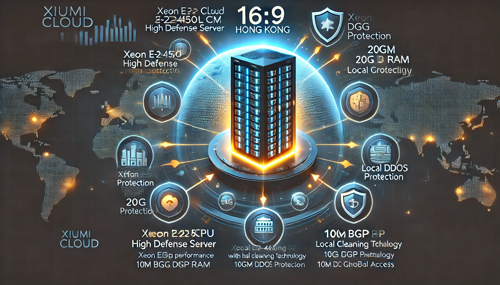
First answer the most direct question: Tencent Cloud has Korean servers. Tencent Cloud continues to expand its international nodes and has provided computer rooms and availability zones in many regions in Asia and Pacific. Services for the Korean market can be queried through the official console for the corresponding region (such as "ap-seoul" or similar naming), and supports basic services such as public IP, load balancing, and cloud hard disks. For enterprise migrations, this means the business can be deployed close to the source users to reduce latency.
Enterprises must evaluate network topology before migrating. It is recommended to adopt a layered architecture: edge access layer (CDN and load balancing), application layer (multi-availability zone deployment), data layer (active/standby or sharding). Plan cross-border links at the same time: public network VPN, dedicated line (Direct Connect) or SD-WAN hybrid solution are available. Focus on bandwidth, packet loss and BGP routing strategies to ensure the stability of cross-region access.
Image migration is the key technology. Recommended process: 1) Take a complete system and data snapshot in the source environment; 2) Make a custom image and export it; 3) Transfer to the target area through image copy or object storage provided by the cloud vendor; 4) Register the image in the Korean target area and instantiate it; 5) Do startup verification and performance testing. Logical backup or master-slave replication should be used for the database to ensure consistency.
Common problems and solutions in practice: Image incompatibility -> adjust driver and kernel parameters; IP and domain name changes -> use unified DNS and short TTL policy; security policy -> synchronize security groups and ACLs in advance, and use private certificate and key management. It is recommended that the migration window be set during low business peaks and allow for rollback time.
Testing and rollback strategies are essential. Conduct a full drill before implementation, including traffic switching (CNAME/weight scheduling), grayscale release, stress testing and observation. If a serious exception occurs, restore the old address and recycle new instances according to the rollback plan, record the SLA impact time, and perform root cause analysis.
In terms of compliance and security, cross-border data transmission must comply with local regulations. Encrypt sensitive data for transmission and static encrypted storage, use KMS to manage keys and enable access auditing. For enterprise users, it is recommended to sign a data processing agreement and use a dedicated line to reduce compliance risks.
From the perspective of operation and cost optimization, after estimating bandwidth, storage and computing costs, you can use on-demand and annual subscription combinations, and rationally use backup lifecycle strategies and hot and cold tiered storage. Control peak costs through monitoring alarms and automatic scaling.
As a suggestion for implementation: first conduct a small-scale pilot and move the core services to Tencent Cloud Korea node for delay and stability verification; then promote full migration, switch in stages and maintain grayscale and rollback capabilities. Record migration scripts and automated processes to form enterprise-level migration templates.
Summary: Tencent Cloud has Korean servers, but successful migration requires rigorous network topology design, standardized image migration steps, complete test rollback and compliance security measures. By following the above practical guidelines, risks can be minimized and smooth launch can be achieved. If necessary, I can develop a customized migration plan and checklist based on your existing network environment.
- Latest articles
- Technical White Paper: Where Are The Native Cloud Servers In Korea? Analysis Of Common Operators And Interconnection Points
- How To Log In To The Taiwan Server? Compare The Steps For Logging Into Different Platforms.
- Frequently Asked Questions About Foreign Trade Business In Alibaba Cloud Singapore Server Countermeasures For Email IP Rejection
- Technicians Share Taiwan Vps Cloud Host High Defense Cloud Space Optimization Operation And Maintenance Experience
- Latency Optimization Of Vietnam Cn2 Server In Multi-regional Node Deployment And Switching
- How To Reduce Latency Fluctuations In PlayerUnknown’s Battlegrounds Servers In Vietnam In Cross-region Battles
- Hardware And Network Reference For E-sports Teams Deploying Taiwanese Server Cloud Space
- Malaysian Vps Evaluation Classified By Usage Scenarios Helps Industry Users Make Quick Comparisons
- Summary Of User Reviews And Comparison Of Which Vps In Singapore Is Better In Terms Of After-sales Service Performance
- Japanese Native IP Proxy Type Guide And Detailed Explanation Of Purchasing Considerations
- Popular tags
-

Detailed Explanation Of High Bandwidth And Peak Traffic Management Strategies Of Korean Cloud Servers
detailed explanation of the high bandwidth definition, billing and peak traffic management strategies of korean cloud servers, including practical suggestions such as bandwidth levels, burst mode, cdn, auto-scaling, traffic shaping and ddos protection. -
What Are The Best Options For Renting Cloud Servers In South Korea?
this article will introduce in detail the best options for cloud server rental in south korea, including reviews of performance, price, and service. -
Does Huawei Cloud Have Korean Servers? Effect And Cost Analysis In Game Acceleration Scenarios
This article provides an original and straightforward analysis of whether Huawei Cloud has servers in South Korea from the three dimensions of architecture, latency, bandwidth, and cost, as well as the actual effects and cost assessment in game acceleration scenarios, and gives practical suggestions.